
Summer 2026 Newsletter
General Manager's Message
Summer is one of our busiest times of year, with irrigation water flowing to customers and crews at work across the service area. Much of the work our crews take on never really gets seen: miles of canal lined to stop water loss, a century-old flume replaced before it could fail, storage tanks sealed and secured, and fire hydrants replaced across the service area. It all serves one purpose, reliable and responsible water management for the communities we serve.
This season we are providing our fourth straight year of full irrigation deliveries, our drinking water quality is improved, and we are planning ahead, expanding capacity on the Forbestown Ditch and adding fire hydrants in a high wildfire-risk area. We are grateful to our crews, our customers, and partners, particularly the funding support from the Yuba Water Agency. Next, our focus is on pursuing state and federal grants to build upon, expand, and sustain this work into the future so we will be able to serve more of our area.
On this page you will find the fuller story behind each of these projects, along with more photos of the work. Thank you for reading, and thank you for your patience while crews are working near roads and canals this summer.
Leona Harris, General Manager
Supporting the Chute Fire Response in Dobbins
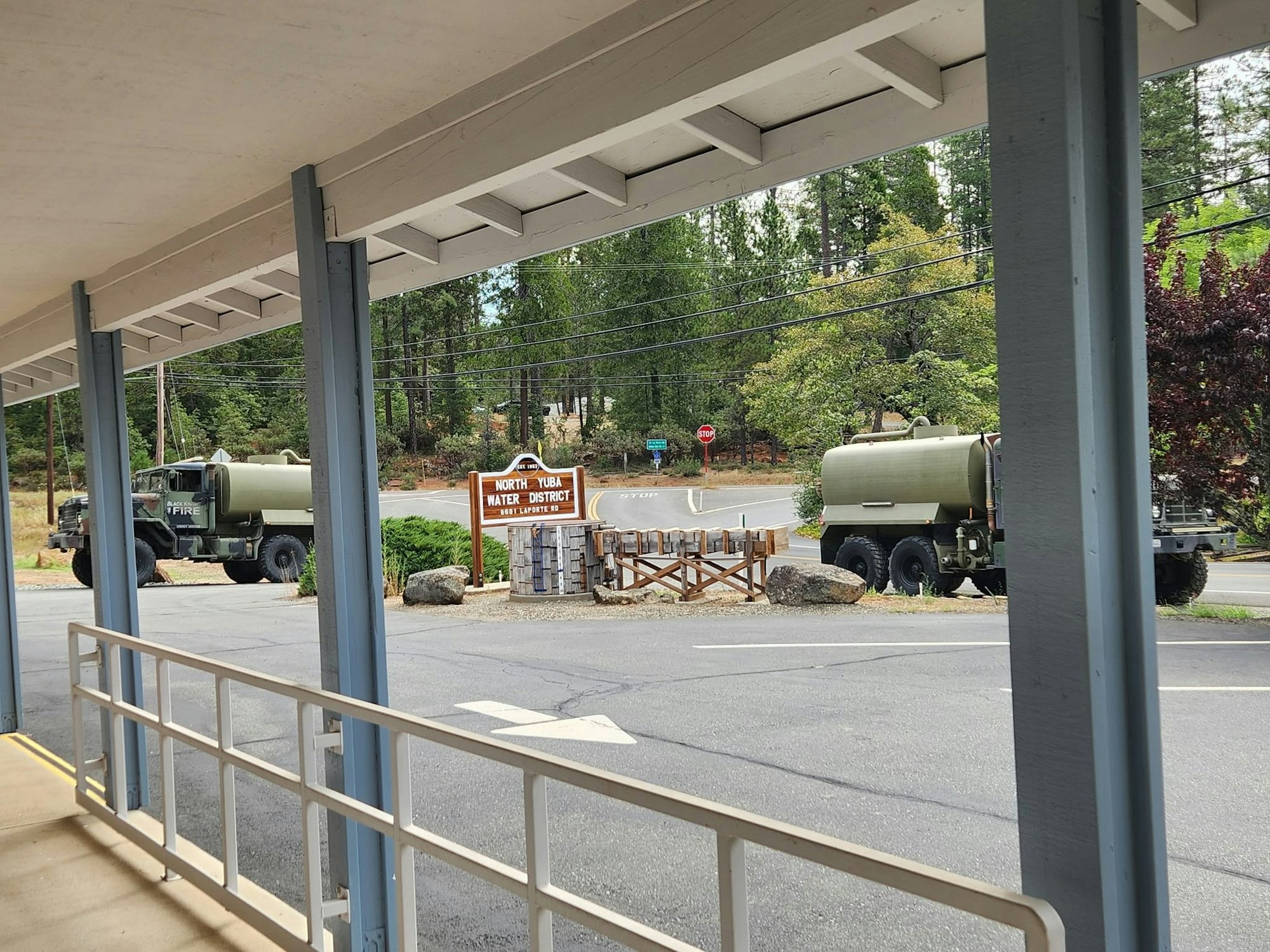
This summer, the District had the opportunity to help support firefighting efforts on the Chute Fire in Dobbins. The helitack base for the response operated out of the Brownsville Air Park, and water tenders filled up at the District office throughout the operation. That water was used to keep dust down at the base, so the helicopters supporting the fire crews could land and take off safely.
Fire protection is part of the District's ongoing work, from the fire hydrant network to the raw water carried in our canals, and supporting the crews who protect our communities.
Rehabilitating the Old Forbestown Ditch
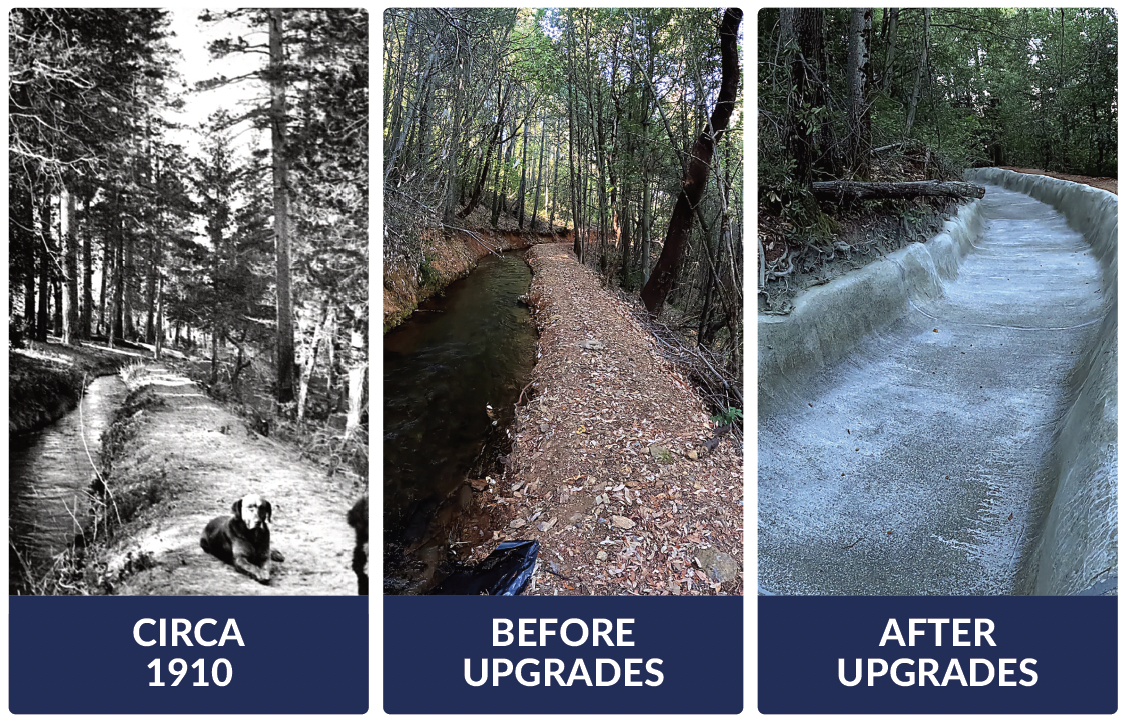
A Gold Rush Waterway Still at Work
The Forbestown Ditch is one of the oldest working pieces of infrastructure in the Yuba Foothills. It was dug by hand between 1852 and 1855 to bring water to Forbestown, then a Gold Rush town of about 3,000 people. Forbestown sits on a ridge with creeks on either side, too high for water to reach it directly, so a log head dam was built to push creek water into the new ditch. That log dam was the forerunner of what is now Lost Creek Dam, built in 1924.

About 170 years later, the ditch is still doing its job. The upper ten miles, owned by the District since July 2010, supply the District's water treatment plant with the water that becomes drinking water for Brownsville, Challenge, Forbestown, and Rackerby, and carry irrigation water toward Dobbins and Oregon House when needed.
The Problem: An Earthen Channel That Leaked
For most of its life the ditch ran as an open earthen channel. Earthen ditches lose water through seepage, and by 2010 the upper ditch was losing roughly 38 percent of the water that entered it. Eroded banks and aging wooden structures limited how much water it could safely carry.
The Fix: Lining the Channel
Since 2023, crews have lined 1.5 miles of the upper ditch, about 15 percent of its length, with shotcrete, a sprayed concrete that seals the channel and stabilizes its banks. Together with the replacement of a leaking flume and the recalibration of a faulty flow gauge, this work has cut losses on the upper ditch to under 20 percent.
What Comes Next
The District is now planning the next phase. A capacity study is nearly complete, engineering design is underway, and the District is pursuing permits and grant funding. The long-term plan combines buried pipe and additional shotcrete sections, which will further reduce losses and expand how much water the ditch can carry.
Recent Projects and Progress
From January 2023 to today, District crews and contractors have completed a long list of infrastructure projects. Here is the fuller story behind each item summarized in the printed newsletter.
Canal Lining and Reliable Irrigation

The District operates about 33 miles of open ditch: the Forbestown Ditch (about 10 miles) and the Dobbins Oregon House Canal (about 22 miles), which delivers water to our irrigation customers. To date, 7.33 miles of shotcrete lining have been installed across the two canals. On the Forbestown Ditch, measured water losses have dropped from about 40 percent to about 20 percent. On the Dobbins Oregon House Canal, losses have dropped from about 65 percent to about 30 percent. That recovered water is a large part of why the District is now delivering its fourth consecutive full season of irrigation water.
Replacing the Hell 4 Stout Flume

The Hell 4 Stout Flume was a wooden aqueduct roughly 100 years old, 40 feet high, and 230 feet long, on the stretch of the Forbestown Ditch that carries all of the water supplying our domestic customers. It had been rated at risk of imminent failure, leaked heavily, and had not seen major repairs since 1989. A failure would have cut off drinking water deliveries. The flume has been replaced with a buried ductile iron inverted siphon, a pipeline that carries the water underground. The replacement removed the risk of collapse and, because the old wooden structure sat in a heavily wooded area, it also removed a fire hazard.
Water Storage Tanks

The old Challenge tank, a 100,000-gallon redwood drinking water storage tank, has been replaced with a new 100,000-gallon bolted steel tank. Two of the District's other steel tanks have been relined; each had more than 50 holes, and the relining has produced significant water savings. All five of the District's domestic storage tanks, which hold drinking water and sit in remote locations, have been painted and secured with new fencing.
Fire Safety and Forest Health

Crews continue to replace aging fire hydrants across the service area, and the District coordinates with the local fire districts. With support from a Cal Fire grant, 93 acres of District property have been masticated, clearing dense brush and small trees to improve forest health and slow wildfire spread. The District's water system has served the area in emergencies before: during the 2020 North Complex Fire, District water supported fire suppression across the area.
Treatment Plant and Operations
A new control system is being installed at the water treatment plant to improve monitoring and delivery reliability. Aerators have been added to the treatment plant pond, and control valves throughout the system have been rebuilt. These improvements, along with better source water management, have noticeably improved the taste and odor of the District's drinking water. Crews also put the District's first vacuum trailer to work, which has shortened the time it takes to find and repair leaks.
Smaller Projects, Real Savings
Not every improvement is a headline project. Replacing the Indiana Ranch siphon valve on the Dobbins Oregon House Canal stopped a continuous loss estimated at half a cubic foot per second, water that now stays in the canal for customers.
Preserving Our History

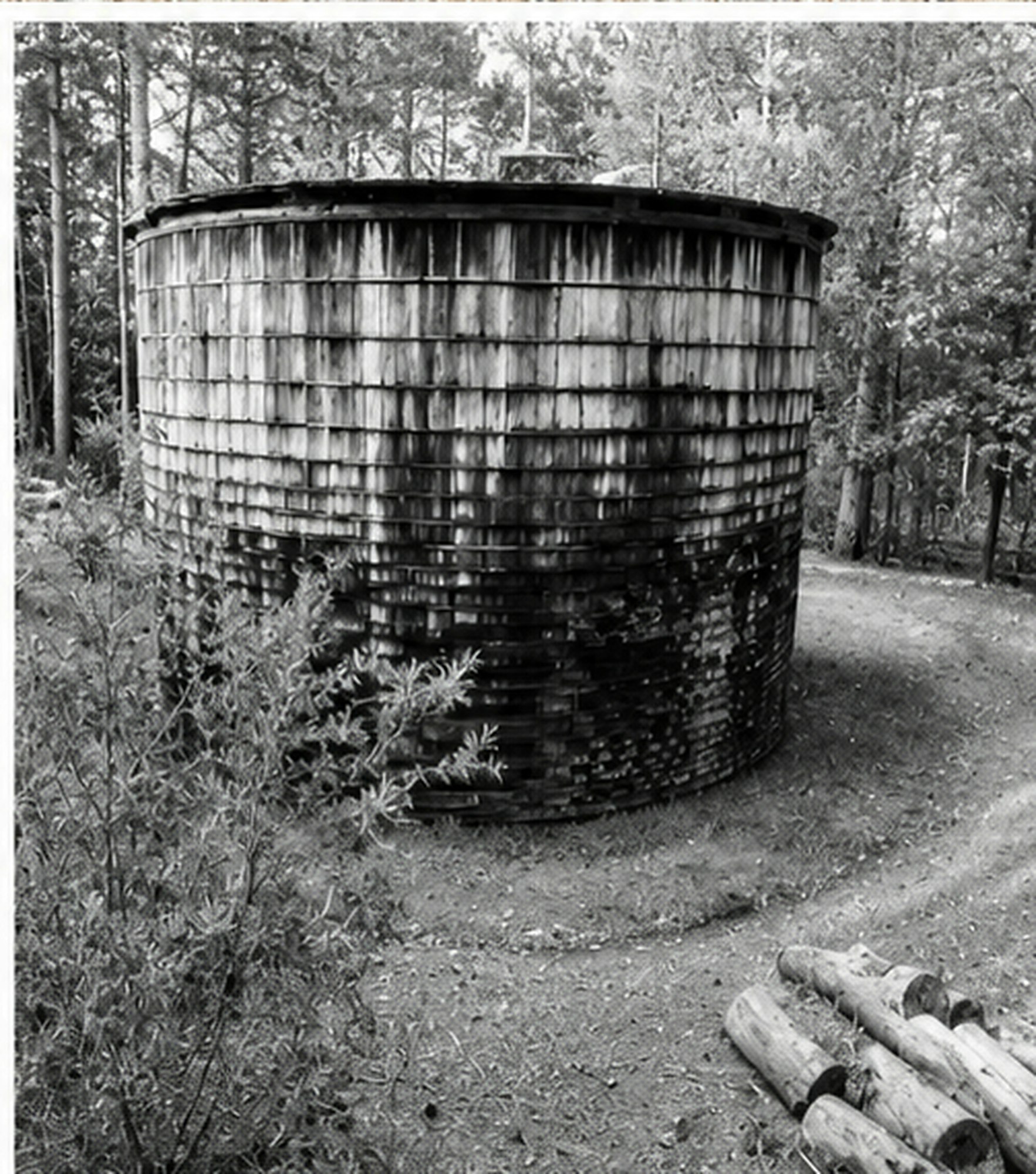
As the District modernizes its system, it is keeping its history in view. Redwood salvaged from the original Challenge storage tank and the old Hell 4 Stout flume has been repurposed into a replica tank display with a working water feature, the District's sign, and flower boxes, all in front of the District office in Brownsville. Stop by and take a look.

Regional Support and Collaboration
This work has been possible because of grant funding and regional partners. The Yuba Water Agency has funded much of the canal lining and infrastructure work through its grant programs. The District is an active member of the Association of California Water Agencies, the Mountain Counties Water Resources Association, and the California Rural Water Association. To keep the work moving, the District is pursuing state and federal grant opportunities for the next round of projects.
Board Meetings
The Board of Directors meets monthly. Meetings are open to the public, in person and virtually. Meeting dates, agendas, and materials are posted here.
Stay Connected
We want to make sure you receive District news in the way that works best for you. Watch your mail for a short questionnaire asking whether you would like future issues by mail or by email, and which address to use. You can also contact the District office to share your preference.
facebook.com/NorthYubaWaterDistrict